
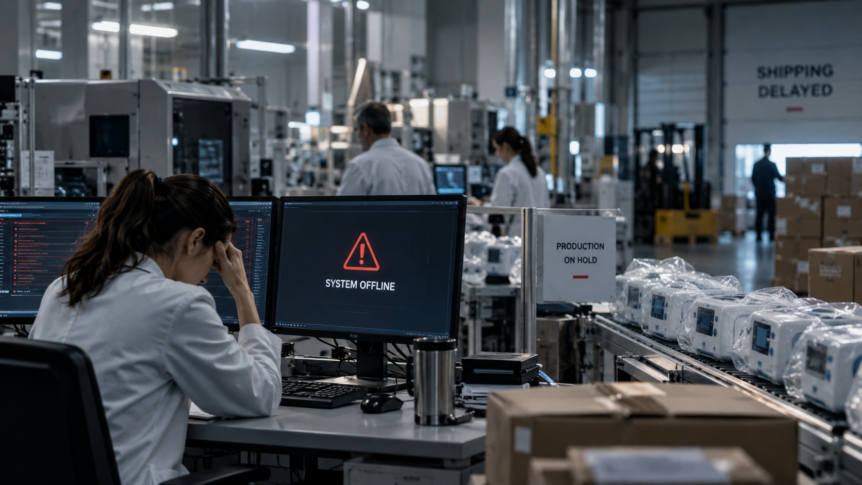
The Cyberattack That Disrupted Boston Scientific—and the Lesson Every Business Should Take From It
A cyberattack doesn’t have to steal millions of customer records to cause serious damage. Sometimes, simply taking critical systems offline is enough.
Boston Scientific, one of the world’s major medical device manufacturers, is dealing with exactly that reality after a cybersecurity incident disrupted operations across the company. The impact has now reached far beyond the IT department.
The incident affected manufacturing, order fulfillment and shipping. According to a September 8 regulatory filing, Boston Scientific now expects the disruption to have a material impact on its financial performance for the third quarter and full year of 2026.
For businesses of every size, there is an important lesson here: cybersecurity is not just about protecting information. It is about protecting your ability to operate.
What Happened at Boston Scientific?
Boston Scientific identified unauthorized activity affecting certain IT systems on August 25, 2026. The company responded by activating its incident response procedures and bringing in outside cybersecurity specialists to investigate, contain the activity and restore affected systems.
But the disruption quickly became an operational problem.
Certain operating systems and business applications became unavailable, affecting Boston Scientific’s ability to manufacture products and process and ship customer orders.
That is an important distinction. The attackers did not need to physically touch a production line to disrupt manufacturing. Interfering with the technology supporting those operations was enough to create problems across the business.
Boston Scientific later reported that the unauthorized activity appeared limited to certain internal, on-premises infrastructure, while its cloud-based systems and applications were not affected.
The company has not publicly disclosed exactly how the attackers gained access, and its investigation remains ongoing.
The Attack Became a Business Problem Very Quickly
By early September, Boston Scientific had restored significant portions of its operations. Major distribution centers were again processing and shipping orders, sterilization facilities were operational, and manufacturing had resumed across most locations.
But restoring systems does not erase the disruption that already occurred.
Boston Scientific said it expects the incident to materially affect its third-quarter and full-year results and now believes it is unlikely to achieve sales-growth and adjusted earnings guidance previously issued in July.
Think about what that means. A cybersecurity incident that began inside the company’s technology environment ultimately reached manufacturing, shipping, customer orders, revenue, financial forecasts and investor expectations.
That is why cybersecurity can no longer be treated as an isolated IT issue.
Cyber Downtime Can Be Just as Dangerous as Data Theft
Most headlines about cybercrime focus on stolen information. Those questions matter, but they are only part of the cybersecurity story.
Businesses often ask:
- How many records were exposed?
- Were Social Security numbers stolen?
- Did hackers publish company files?
- Was customer information compromised?
Those are important questions, but downtime can be just as damaging.
Imagine losing access to the technology responsible for:
- Processing customer orders
- Scheduling employees
- Managing inventory
- Creating invoices
- Accessing customer records
- Running production equipment
- Communicating internally
- Shipping products
- Processing payments
Even if attackers never publish a single customer record, losing access to those systems for several days can create significant financial and operational consequences.
Boston Scientific’s experience demonstrates just how interconnected modern businesses have become with their technology.
Recovery Is More Than Having a Backup
Many organizations believe having backups means they are prepared for a cyberattack. Backups are extremely important, but recovery planning needs to go much further.
If a critical system suddenly disappears tomorrow, businesses need answers to questions such as:
- How quickly can we restore it?
- Which systems need to come online first?
- What other systems depend on it?
- Can employees continue working while systems are unavailable?
- Can customers still place orders?
- Can we communicate if our normal systems are offline?
- Has our recovery process actually been tested?
Boston Scientific’s response involved restoring systems carefully while validating that they could safely return to normal operations. The company also had to work through order backlogs created during the disruption.
Recovery is not simply flipping a switch.
Your Technology Dependencies Matter
Another important lesson is understanding which pieces of technology your business cannot operate without.
Most companies have dozens, or even hundreds, of systems, applications, vendors and integrations running behind the scenes. But not all of them carry the same level of risk.
An accounting application might affect invoicing. A customer relationship management platform could affect sales. A warehouse management system could affect fulfillment. An identity platform could prevent employees from accessing almost everything. A manufacturing system could stop production entirely.
Businesses should identify those dependencies before an incident occurs. Knowing what matters most helps determine where stronger security controls, redundancy, monitoring and recovery planning should be prioritized.
What Businesses Should Take Away From This Attack
You do not need to operate a global medical-device company to experience this type of disruption. Small and midsized businesses are dependent on technology too, and often have fewer resources available when something goes wrong.
There are several areas organizations should continually evaluate:
- Protect accounts and identities. Use strong authentication, multi-factor authentication and appropriate access controls wherever possible.
- Monitor systems for unusual activity. The faster suspicious activity is detected, the faster an organization can investigate and respond.
- Limit unnecessary access. Employees, administrators and applications should only have access to the systems and information they actually require.
- Understand your critical systems. Know which applications and infrastructure would create the biggest operational problems if they became unavailable.
- Maintain and test backups. Having a backup is important. Knowing that it can actually be restored when needed is even more important.
- Create an incident response plan. Know who makes decisions, who contacts vendors, who handles communications and how operations continue during an outage.
- Test business continuity. Do not wait until systems are unavailable to discover that your recovery plan depends on another system that is also unavailable.
Cybersecurity Is Business Continuity
Boston Scientific is a massive global organization with significant resources, dedicated security teams and access to leading cybersecurity expertise. One cyber incident was still capable of disrupting global operations and affecting financial expectations.
That should get the attention of every business owner.
Instead of only asking:
- Can someone steal our data?
- What happens if an employee clicks the wrong link?
- Are our backups working?
Businesses also need to ask:
- What happens if our technology stops working tomorrow?
- How long can we continue operating?
- Which systems would hurt us the most if they went offline?
Protecting a business means more than protecting files. It means protecting the systems that allow employees to work, customers to buy, products to move and the company to continue operating.
At Engler IT, we help businesses look beyond basic cybersecurity and build technology environments designed around security, visibility, recovery and business continuity.
Because when technology is critical to your business, cybersecurity is critical to your business too.